Introduction
Lie detectors, or polygraphs, have been used for over a century as tools for detecting deception. Their use in criminal investigations, security screenings, and even reality television shows has fueled widespread interest and debate about their accuracy. But how much scientific backing do these machines really have? Can we trust the results of lie detectors, or are they prone to error?
The Science of Polygraphy
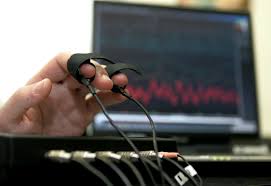
At its core, polygraphy is based on the idea that lying triggers certain physiological responses that can be measured. A polygraph machine typically monitors and records four main physiological signals:
- Heart rate: Increases during moments of stress or anxiety.
- Blood pressure: Rises when a person feels stressed or threatened.
- Respiratory rate: Breathing patterns may change when a person is nervous.
- Galvanic skin response (GSR): Measures the skin’s conductivity, which increases when a person sweats due to stress.
The polygraph test relies on the theory that deception causes an individual to experience stress, and this stress will produce measurable physiological changes. The examiner interprets these signals to assess whether the subject is telling the truth.
The Role of the Autonomic Nervous System
The autonomic nervous system (ANS) controls many of the body’s involuntary functions, such as heart rate, respiration, and perspiration. When a person lies, it is believed that the stress of deception triggers the “fight-or-flight” response, causing the ANS to activate. This leads to an increase in heart rate, faster breathing, and more sweating, all of which can be detected by the polygraph.
However, the ANS is not only activated by deception. Anxiety, nervousness, and even excitement can produce similar physiological responses. This raises questions about whether polygraph tests are truly detecting lies or simply measuring stress.
Control Questions and Baseline Responses
A critical part of polygraph testing involves the use of control questions, which are designed to elicit a baseline physiological response. These questions are typically innocuous and unrelated to the investigation, such as “Is your name John Doe?” or “Do you live in New York?”
By comparing the subject’s responses to these control questions with their responses to the relevant (deception-related) questions, the examiner can determine whether there is a significant difference in physiological reactions. If the subject’s physiological responses are more pronounced when answering relevant questions, this may suggest deception.
Accuracy and Reliability
The accuracy of polygraph tests is widely debated. Proponents argue that polygraphs can accurately detect deception in 70-90% of cases, while critics claim that these tests are unreliable and prone to false positives and false negatives. Several factors can influence the outcome of a polygraph test, including:
- The subject’s mental and emotional state.
- The skill and experience of the examiner.
- The phrasing and structure of the questions.
- The quality of the polygraph equipment.
False positives occur when a truthful person is incorrectly judged to be lying, while false negatives happen when a deceptive person successfully passes the test. Both types of errors highlight the limitations of relying on physiological responses as indicators of deception.
Can We Trust Lie Detectors?
Given the scientific uncertainties surrounding polygraph tests, it’s clear that they should not be relied upon as foolproof methods of detecting lies. Many experts argue that polygraphs are better suited for investigative purposes rather than definitive truth-telling tools.
In legal contexts, polygraph results are often deemed inadmissible in court due to their questionable reliability. Nonetheless, they are still used by law enforcement agencies, government agencies, and private employers in specific situations.
Conclusion
While the science behind liedetectors.ie is intriguing, their reliability is far from perfect. Physiological responses can be influenced by a variety of factors, making it difficult to determine whether a person is truly lying or simply anxious. Until more advanced technologies are developed, polygraph tests should be used with caution and not as the sole indicator of truth.
Available Addresses for Inclusion:
Dublin:
Ballycoolin – 1 Ballycoolin Rd, Ballycoolin, D15 AKK1
Sandyford – The Chase, Sandyford, D18 Y3X2
Pembroke House – Pembroke House, D02 NT28
Drogheda:
56 West St, Moneymore, Co. Louth, A92 E4CY
Monaghan:
Marian Industrial Estate, H23 X273
Northern Ireland:
Belfast – Cromac St, BT2 8LA
Newry – Ground and 1st Floor, 30 Kilmorey St, BT34 2DE
Coleraine – Regus, River House, Londonderry, BT51 3DR