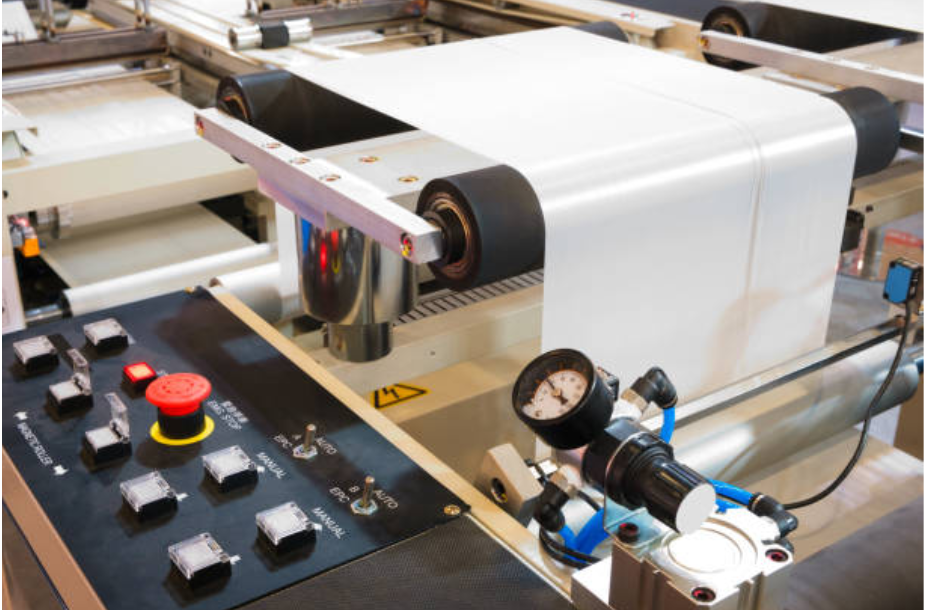
Companies in the packaging industry are under pressure to provide economical printing services without compromising quality because of increasing manufacturing expectations. Label making is now one of the most affordable printing technologies available today because flexographic printing is its highest form. This method is exceptionally fast, adaptable, and able to handle massive workloads in a cost-effective manner, which explains its widespread application in a variety of business sectors.
Flexographic printing machines coupled with industrial label press have further revolutionized the label printing business by increasing productivity and reducing the cost of production.In addition, they have made their marks on the industry by improving utter quality and easing production workflows. This article highlights how flexographic printing remains the answer to cost-effective label making and why it continues to be a popular choice for quality-focused industrial printer customers.
What Is Flexographic Printing And Its Process
Flexographic printing, also referred to as flexo printing, is a quick and efficient printing method that employs flexible relief printing plates along with an array of rotary printing cylinders. It typically works at high speeds and due to its unique way of working, it is also particularly useful for industries making labels in large quantities. The range of materials that can be printed with flexo printing is quite large and includes paper, plastic film, and metalized foils.
To begin the flexographic process, an anilox roller transfers ink to ink printing plates. The plates transfer the design onto the substrate and the substrate moves through the press. Unlike older forms of printing, which need drying times and frequent ink changes, flexo printing is perfect for bulk orders because of its fast-drying inks. Many modern flexo presses have automated systems and inline finishing, like die cutting, laminating and even varnishing the print, which enhances efficiency.
One of the major advantages of using flexographic printing in label production is the efficiency it provides in long-run jobs. Flexo presses can print from thousands to millions of labels. They also ensure balance in color, sharpness, and durability and minimize production downtime. Furthermore, digital controls in newer models of industrial equipment improves accuracy, eliminate waste, and increase efficiency.
How Flexographic Printing Machines Save Money
For a business that produces labels, one of the most appealing features of flexographic label printing is that it is able to provide reasonably priced printing services within a record time. Other forms of printing such as offset or gravure printing involve expensive and time-consuming setup processes for mass label production. As opposed to this, flexo printing machines are capable of performing large volume work in a short time without compromising the quality of the prints.
Energy cost savings is achieved by material waste reduction too. Flexo printers have the capability of utilizing quick drying, low viscosity inks that not only save energy but also have less drying time. Some manufacturers of industrial printing machinery also developed economical flexo presses with LED UV curing systems that save materials and decrease costs of production.
Savings from the increased automation of the processes is also very important. Advanced flexo presses are fitted with automatic registration systems that align the print layers, which reduces the overlaps between the layers and thus conserves materials. The inline die-cutting feature, along with lamination, eliminates secondary operations that need to be done, which not only saves additional processing time, but also additional labor costs.
Still, sustainability is a growing problem within the printing domain, and flexographic printing achieves this by integrating eco-friendly ink solutions. Water-soluble and solventless inks aid in meeting environmental boundaries and lowering the costs associated with hazardous waste disposal. In addition, the capability to print on compostable or recyclable substrates further enhances the cost-effectiveness of flexo printing as part of long term sustainability planning.
Comparing Flexographic Printing with Other Label Printing Methods
When a company is assessing technologies for producing labels, it commonly puts flexographic label printing into comparison with other well-known technologies like digital label printing and gravure label printing. All of them have their strong points, but flexo printing is highly appreciated for its ability to combine great speed, low cost, and good-quality print results.
Flexographic printing has a lower cost per print compared to digital printing when large volumes of units are being produced. Digital printing is ideal for short runs internally, especially variable data printing forms, but is not cost-effective when the volume increases. However, flexographic printers can take advantage of the low-cost narrow web flexographic printing, which enables cost-effective large scale production of label printers.
One of the most economical types of printing is gravure printing. It has the highest resolution output among all printing methods. The downside, however, is that it requires expensive engraved cylinders which makes it infeasible for most businesses. Flexo printing is a better option since it provides relatively similar print quality but at a lower setup cost making it perfect for industries where label design changes are frequent.
Flexo printing also has the added benefit of being versatile in substrate compatibility. Digital printing is often restricted to specific materials, however, flexographic presses can print on a broad array of substrates including textured and flexible materials. This flexibility allows firms to create high-quality labels to cater for various packaging needs without the need to purchase multiple printing technologies.
Choosing the Right Flexographic Printing Equipment and Looking Ahead
The choice of industrial printing equipment has an effect on the cost efficiency of label production. Therefore while purchasing a flexo printing machine, businesses ought to make an investment with the print speed, level of automation, and type of compatible substrates in mind.
For optimal efficiency, high-speed flexographic presses featuring servo driven motors and automated tension control should be used. These also reduce the chance of misprints and material waste. Moreover, the addition of inline finishing, for example, die cutting, varnishing, and embossing, enhances production efficiency because less post print processing is needed.
The primary concern turns out to be the quality of flexo printing plates. By purchasing durable, high-resolution plates, businesses can achieve satisfactory print quality while minimizing replacement costs. Also, businesses should assess the eco-friendly and economical ink system compatibility of the flexo press machine and purchase such machines.
The support and maintenance services are another important factor for extending the life cycle of flexographic printing machines. Such businesses that deal in industrial printing machinery should be fully equipped for technical support, operational guidance, and scheduled service maintenance to optimize the equipment’s uptime and ROI.
In the future, the flexographic printing industry is more advanced as there are continuous improvements that help the industry reduce the expenses incurred and add value in other ways. The most notable one is the marriage of digital and flexo hybrid printing that permits the user to take advantage of flexo’s speed while not losing out on the creative aspects of digital printing.
Sustainability stays as a focus, with many manufacturers switching to waterless printing, biodegradable inks, and energy-saving dryers to lessen the damage thrust upon the environment by flexo printing technology. Businesses geared towards sustainable flexo printing practices will be able to stand out from the rest on the ever-growing competitive market
The automation and artificial intelligence technology is poised to change flexo printing for the better. Predictive maintenance and monitoring will provide businesses with real-time insights that smart printing systems will streamline waste reduction, operational efficiency, and expenses. The continual rise of AI will only improve the accuracy of flexographic label production through automated print defect detection and AI ink management systems.
Conclusion
Flexographic printing solutions mastered label production through their integrated systems that support high-speed printing, saving materials, and long-term savings. As industrial printing technology advances, it seems like flexo printing will be the go-to solution for businesses searching for cost-effective, high-quality, and sustainable label printing options.
Both label press and flexographic systems are becoming more advanced, providing more productivity and sustainability at a lower price. The right choice of flexographic printing machines can simplify production, decrease expenses, and keep up with the fierce competition in the packaging industry.
With the movement towards more integrated and sustainable print production, flexographic printing will continuously support cost-saving measures while achieving high-quality outputs put forward by business when it comes to label production.