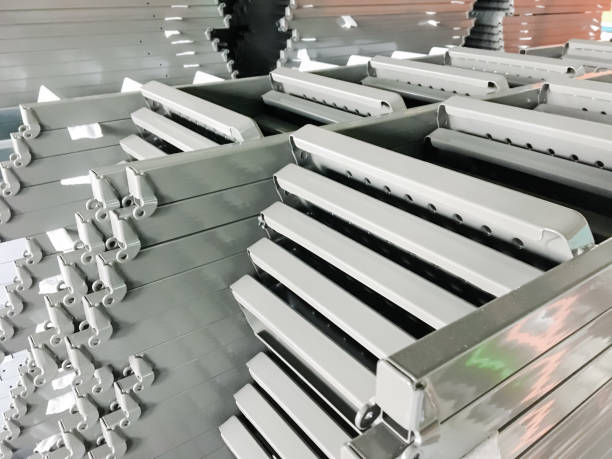
The advancement of aerospace and automotive industries has relied significantly on sheet metal fabrications because they are robust, flexible, and economical. As technology progresses, towards better manufacturing practices, there is a paradigm shift in sheet metal fabrication companies as they adapt to the higher standards of precision and lightweight construction, along with the need for further eco-efficiency. This article looks at the advancements in sheet metal fabrication in the aerospace industry together with the automotive industry, covering the innovations that drive both efficiency and performance in these industries.
The Evolution of Sheet Metal Fabrication in Aerospace and Automotive Manufacturing
The application of sheet metals in the aerospace and automotive industries started in the 20th century when producers began replacing wooden components with metal ones to enhance their durability. In the case of aerospace, early aircraft tend to use aluminum sheets because of their lightness and resistance to rust. These metals were manually-cut, shaped, and riveted to make the aircraft frames and panels. Likewise, in the automotive industry, Ford’s introduction of an assembly line made car manufacturing faster and more economical.
While incorporating sophisticated manufacturing technology to increase precision and performance, sheet metal fabrication companies have improved over the years. In aerospace, the combination of Computer Numerical Control (CNC) machining and laser cutting allows for the development of complex parts with a very small footprint. Modern aircraft designs have also benefited from the evolution of Hydroforming and superplastic forming that facilitates the construction of complex aerodynamic shapes.
The use of lightweight materials such as high strength aluminum and carbon fiber composites in new automobiles contribute considerably to fuel efficiency by decreasing the weight of the vehicle. With the proliferation of Electric Vehicles (EVs), sophisticated fabrication techniques are being used to construct lighter weight battery enclosures and structural components for heightened protection of the enclosures and enhanced performance. Fabrication process planning errors and costs have decreased due to engineers using digital twin technology to simulate and perfect processes prior to production.
Integration of robotics in the refinement of existing multi-material welding has made it possible to incorporate different metals in a single component of a car and aircraft. Older forms of welding have been substituted or complemented with bonding methods like infrared laser or friction stir welding as they are more lightweight and have stronger connections. This has become increasingly useful in aerospace where the decrease of an aircraft’s total mass translates to saving fuel and more efficient flight performance.
Technological Innovations Driving Efficiency and Precision
Manufacturing processes for car body parts, as well as aircraft components, is advanced with new technologies, which is paramount in the aerospace and automotive industries. One of these innovations is high-power laser cutting, which provides a much more accurate way of cutting metal sheets into different sized pieces with the least waste possible. It is predominant in the production of fuselage panels for aerospace, automotive chassis, as well as mechanical intricate parts.
To further enhance the efficiency of these particular fabrication processes, automation is key. For instance, robotic arms equipped with laser welds and cutters can effectively perform higher degree assembly tasks with little or no human operators needed, thus, can execute with more precision and higher speed. Quality analysis and improvement data is analyzed with AI fabrication systems which in result optimize the processes by decreasing quality issues and material scraps.
The invention of additive manufacturing and 3D metal printing is set to revolutionize the field. With this technology, manufacturers can create intricate designs for customized metal parts with much greater ease than traditional fabrication methods. In aerospace, it is already possible to integrate 3D printed metal parts into aircraft engines and structural components while in automotive, the technology is used for rapid prototyping and low volume production of custom parts.
Additionally, the development of advanced composite materials and hybrid metal fabrication methods results in even lighter and stronger structures for vehicles and aircraft. Metal matrix composites combine a matrix of aluminum or titanium with reinforcing constituent materials of ceramic or carbon fibers and are becoming leading candidates for high performance materials. This class of materials provides great strength and resistance to elevated temperatures while allowing the creation of complex pieces.
Sustainable and Environmentally Friendly Practices in Sheet Metal Fabrication
With an ever-growing focus on the impact a business has on the environment, sheet metal fabrication companies are updating their processes for improved eco-friendliness. The fabrication of sheet metal parts can now incorporate the practice of using aged metals which cut back on mining processes for raw material and production costs. Moreover, the application of laser and waterjet cutting makes it possible to reduce waste, keeping more of the raw material used in the final product.
State-of-the-art technologies are shifting manufacturing perspectives from traditional single-purpose to multi-purpose products that integrate information and communication technologies. This shift from fossil fuel driven to renewable energy sources is fueled by sustainability initiatives within the business and global policies, reflecting an increase for materials engineering demand in aerospace industries. Furthermore, makers of motorcar are adopting new advanced techniques of making automobiles that are of easier shapes, lighter, and more economical in fuel consumption which results in reduced gas emissions.
Customers’ demand for electric and hybrid cars has boosted the adoption of green manufacturing processes as well. Manufacturers can use advanced forming technologies like hydroforming to produce light-weighted and highly strong metallic parts with minimum waste. Moreover, replacing traditional chemical coatings with biodegradable corrosion resistance treatments makes the sheet metal fabrication process eco-friendlier in addition to using it’s based products.
Lastly, more companies are starting to use lifecycle analysis (LCA) in combination with their production processes. This type of analysis allows firms to look through the products’ full life cycle from raw material extraction to the end of product use, and evaluate how much damage their operations incur to the environment. With better information and analytic tools at their disposal, manufacturers can improve their sourcing strategies, energy use, and waste disposal in the context of metalworking, making it more responsible as well as effective.
Forthcoming Prospects for Sheet Metal Fabrication in Aviation and Automotive Industries
With the passage of time, advancements in technology suggest that companies specializing in sheet metal fabrication automation, intelligent manufacturing, and eco-friendly tactics will keep progressing. Apart from that, machine efficiency will be improved through the use of AI-powered predictive maintenance, which goes along with equally minimizing machine downtime. Moreover, manufacturers will be able to integrate real-time monitoring systems that will help them evaluate production metrics and streamline fabrication processes.
Aerospace and automotive industries would benefit especially from new materials because of their unprecedented strength to weight ratios. Graphene reinforced metals, for instance, and other new age alloys will be extremely instrumental for fuel efficiency enhancement as well as performance in electric and next generation aircrafts design.
Another fabrication method foreseen to gain popularity is called hybrid manufacturing. As the name suggests, this allows utilizing traditional fabrication techniques alongside 3D printing. This will enable complex components to be designed, while also ensuring the components are as robust as those made with conventional metal machining. To satisfy the market’s needs in lightweight and strong high-performance materials, companies are obliged to advance the fabrication methods they employ.
Furthermore, artificial intelligence in automation and nanotechnology are predicted to change the future of metal self-healing surfaces and coatings, where the repair of surfaces is done automatically. This will enable significant savings on maintenance costs while improving the safety of critical aerospace and automotive components.
Conclusion
sheet metal fabrications for the aerospace and automotive sectors have improved, thanks to newer materials, advanced manufacturing processes, and sustainability initiatives. With the evolution from manual processes to automations and 3D printing, fabrication companies are now active contributors to the advancement of today’s transportation systems. It is imperative for component manufacturers to continuously invest in innovations so that they are not caught in industry developments and the demand for lighter, tougher, and sustainable products is satisfied.
Aerospace and automotive industries will still be engineering marvels, but the anticipated efficiency, accuracy, and eco-friendliness in the future of fabrication of sheet metal is staggering. Sustainable and advanced practices in technologies enable companies to take the helm in the dynamic world of premium metal fabrication.